Breast cancer remains one of the most prevalent malignancies among women worldwide. Although surgical resection can remove the bulk of the tumor, residual microscopic disease frequently leads to recurrence. Furthermore, surgery often results in permanent damage to breast tissue, impairing lactation function and imposing significant psychological distress on patients.
Addressing these dual challenges, Professor Shenqiang Wang at Soochow University has developed an innovative "biomimetic lactation" strategy. This approach utilizes engineered mammary organoids as a living drug delivery system for post-surgical chemotherapy and gland regeneration (Fig. 1).
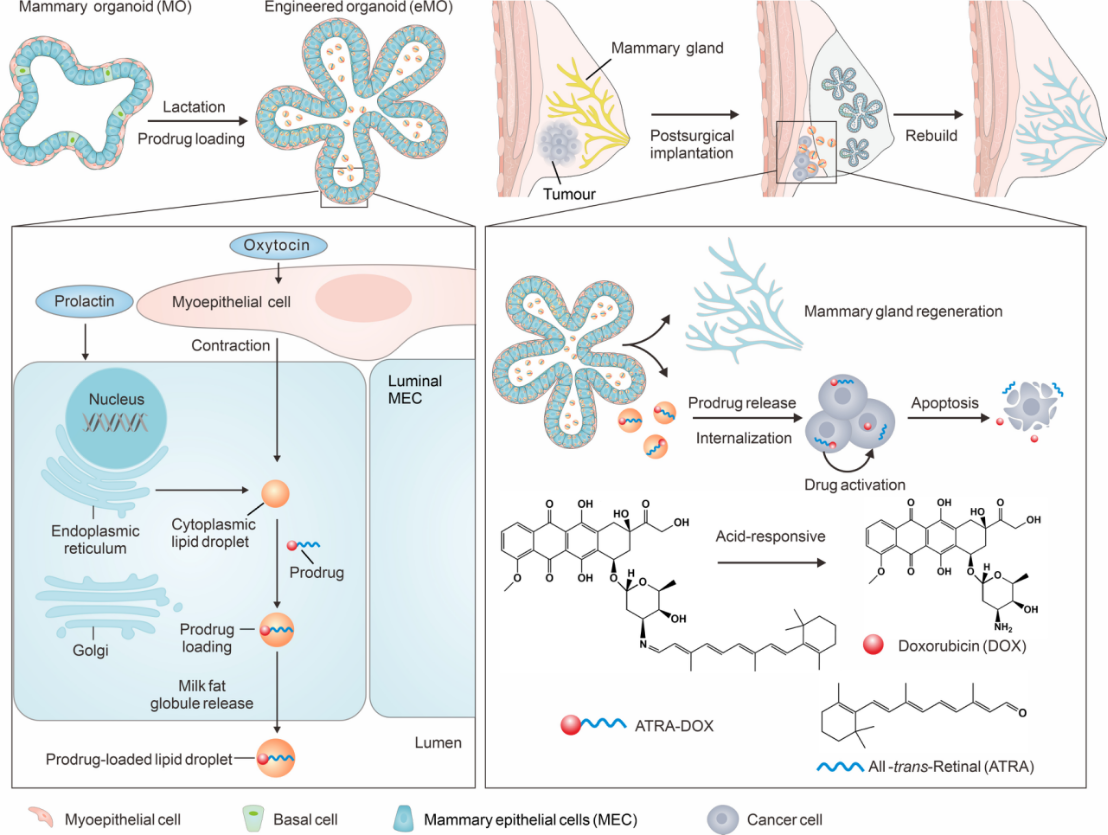
Fig. 1 Schematic illustration of the construction of engineered mammary organoids for post-surgical chemotherapy and mammary gland regeneration.
Mammary organoids are three-dimensional miniature gland models that recapitulate the architecture of native tissue, comprising an inner luminal layer and an outer myoepithelial layer capable of secretion and contraction. In this study, the researchers engineered these organoids to serve dual functions as both a "living drug reservoir" and a "tissue regeneration unit." By inducing the organoids to undergo lactogenic differentiation ex vivo, they promoted the intracellular accumulation of lipid droplets. A pH-responsive lipophilic prodrug (ATRA-DOX) was efficiently encapsulated within these droplets. Upon implantation into the post-surgical cavity, the myoepithelial cells of the organoids autonomously contract, mimicking the physiological process of milk ejection to release drug-loaded lipid droplets into the local tumor microenvironment in a sustained and controlled manner.In a mouse model of post-surgical breast cancer recurrence, this engineered organoid depot demonstrated remarkable therapeutic efficacy, reducing the tumor recurrence rate to 25% and enabling a 75% survival rate beyond 100 days in the treated cohort. Unlike conventional synthetic scaffold materials, these organoids act as a "living filler." Beyond local drug delivery, they seamlessly integrate with the host mammary tissue, reconstructing the ductal network. Critically, the regenerated mammary tissue successfully restored full lactation function in recipient mice following pregnancy.
This groundbreaking work, titled "Mammary organoid-based depot for post-surgical chemotherapy and gland regeneration," has been published in Nature Biomedical Engineering.
In recent years, Professor Shenqiang Wang's laboratory has focused on the complex biological interplay between anti-tumor immunity and tissue regeneration in the post-operative setting. By developing a series of biomimetic drug delivery platforms, the team has achieved precise spatiotemporal regulation of post-surgical immunotherapy and tissue repair (Nat. Biomed. Eng., 2026, in press; PNAS, 2026, 123, e2419694123; Nat. Cancer, 2025, 6, 1384–1399; Adv. Mater., 2024, 36, 2409590; Nat. Electron., 2024, 7, 51–65; Nat. Commun., 2023, 14, 6953; Nat. Commun., 2023, 14, 3431; Natl. Sci. Rev., 2022, 9, nwac037). Building upon this foundation, the newly proposed organoid-based drug delivery platform expands the therapeutic utility of organoid technology and offers a promising paradigm for integrating post-surgical cancer therapy with functional tissue restoration.
Professor Shenqiang Wang of Soochow University served as the first author and co-corresponding author of this study. This research was supported by grants from the National Natural Science Foundation of China, the National Key R&D Program of China, and the Gusu Innovation and Entrepreneurship Leading Talents Program, among other national and provincial-level funding initiatives.
Shenqiang Wang#*, Yinxian Yang#, Yanfang Wang, Jinpeng Han, Tong Hu, Sheng Zhao, Feng Liu, Xinmin Yu, Tingxizi Liang, Yuqi Zhang, Huili Hu*, Jicheng Yu*, Zhen Gu*. Mammary organoid-based depot for post-surgical chemotherapy and gland regeneration. Nat. Biomed. Eng., 2026, https://doi.org/10.1038/s41551-026-01655-110.1038/s41551-026-01655-1.
Co-corresponding author:
 wps3.png
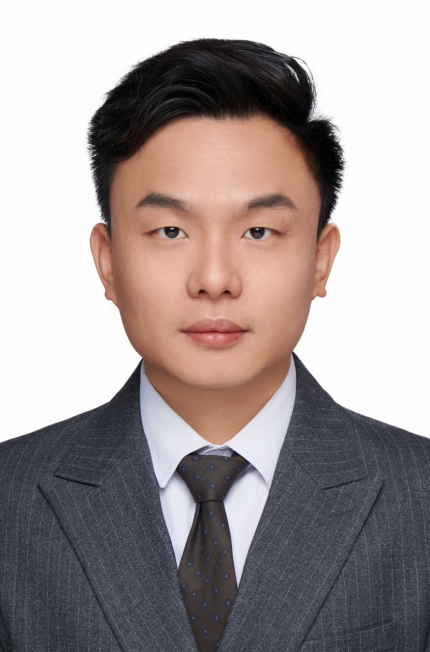
Shenqiang Wang is a Professor at Soochow University. His research focuses on the design and development of intelligent drug delivery systems to achieve post-surgical cancer immunotherapy and tissue regeneration. He has served as the principal investigator for projects funded by the National Natural Science Foundation of China, the Gusu Innovation and Entrepreneurship Leading Talents Program, and industry-sponsored collaborative research initiatives. To date, he has published over 20 papers in SCI journals. Among these, he has authored or co-authored 16 papers with an impact factor greater than 10 as first author or corresponding author in leading journals within his field, including Nature Biomedical Engineering, Nature Cancer, Nature Electronics, Nature Communications, Advanced Materials, Proceedings of the National Academy of Sciences (PNAS), National Science Review, Nano Letters, and Biomaterials. Three of his publications have been recognized as ESI Highly Cited Papers. He also serves as a Youth Editorial Board Member for several esteemed journals, including Nano-Micro Letters, Exploration, VIEW, and the Asian Journal of Pharmaceutical Sciences.
Address: Yunxuan building, phase II, Dushu Lake campus, Suzhou University
No. 199, Ren'ai Road, Suzhou Industrial Park, Suzhou, Jiangsu, China
Email: pharm@suda.edu.cn
Tel: 0512-65882089


