Proteolysis-targeting chimeras (PROTACs) are an emerging therapeutic modality via targeted protein degradation.The novel event-driven mechanism confers PROTACs an enhanced drug efficacy and selectivity while expanding the druggable target space.However, thelingering concerns about thesuboptimal pharmacokinetics and systemic toxicity resulting from large molecular weight and high polar surface area of the PROTACs and lacking tissue specificity of the ubiquitin E3 ligases, greatlylimit clinical applications of PROTACs.
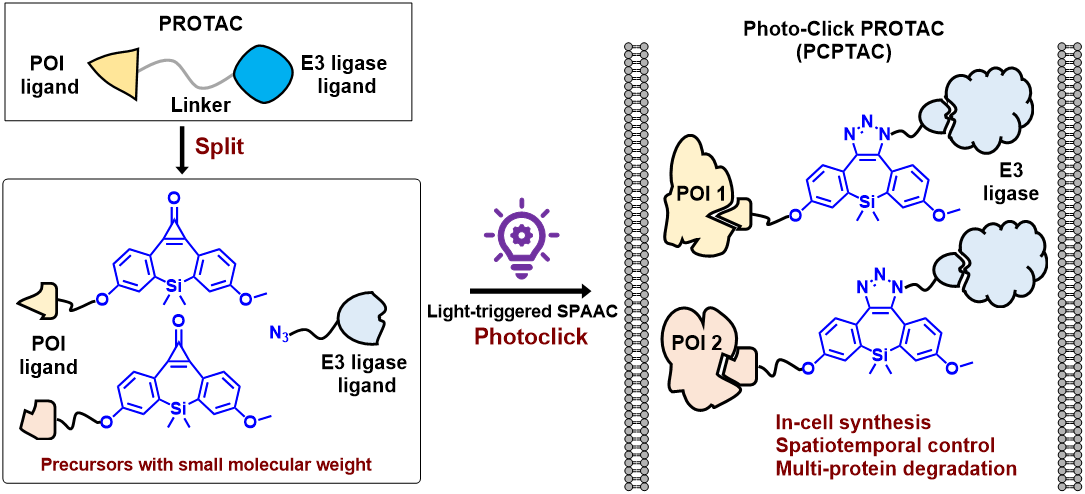
To tackle the issues, Professor Ya-Qiu Long’s group innovatively devised a photo-click proteolysis targeting chimera (PCPTAC) that enables spatiotemporally controlled synthesis of PROTACs in live cells by photo-triggered bioorthogonal ligation, based on a split-photoclick strategy. They judiciously dissect high molecular weight PROTAC into two smaller precursors properly armed with a bioorthogonal reactive group pair, facilitating cell membrane penetration and on-target generation of PROTACs. After screening the reported photo-click reactions, they elaborately selected the photo-triggered strain-promoted azide–alkyne cycloaddition (photoSPAAC) reaction between azide and the ring strained cyclooctyne,e.g. dibenzosilacyclohept-4-yne.
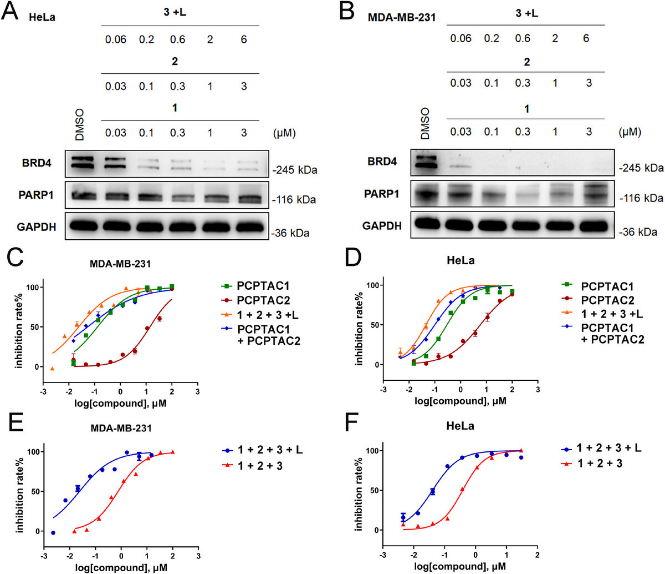
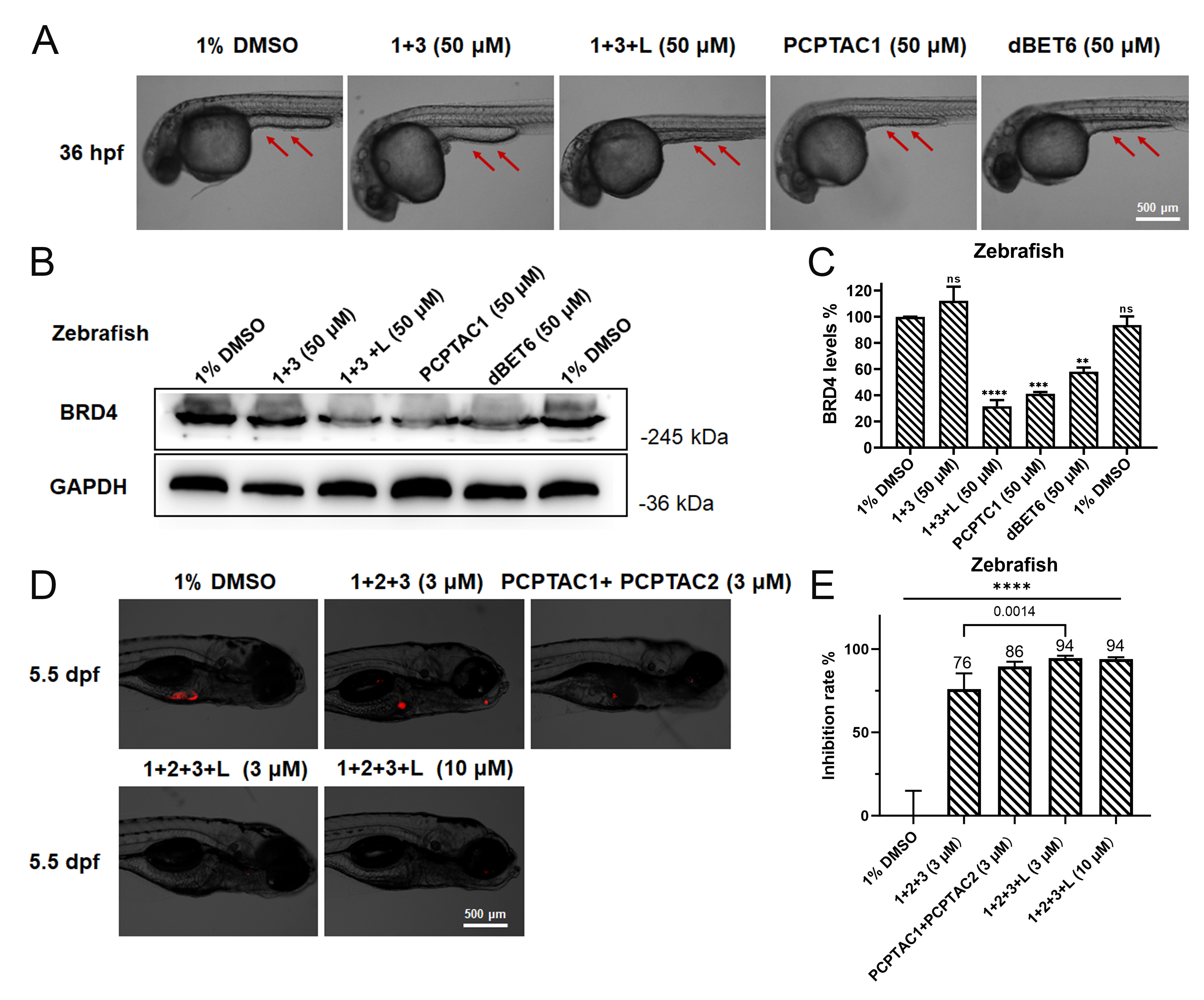
For a proof-of-concept study and potential treatment for triple-negative breast cancer (TNBC), they selected BRD4 and PARP1, two oncogenic proteins with synthetic lethality, as dual therapeutic targets for the PCPTACs investigation. A photocaged dibenzosilacycloheptyne (photo-DBSH) and the complementary azide were deployed to tag the oncoprotein ligands (i.e., (+)-JQ1 for BRD4 and Olaparib for PARP1) and the E3 ligase ligand (i.e., Pomalidomide for CRBN), respectively, delivering photo-DBSH-JQ1 (1), photo-DBSH-Olap (2) and azide-pomalidomide (3) correspondingly. Upon light irradiation, photo-DBSH-JQ1/-Olap was rapidly uncaged to give the reactive cycloalkyne-JQ1/-Olap, which immediately underwent a SPAAC reaction with azide-Pomalidomide, in situ generating dual PROTACs for simultaneous degradation of BRD4 and PARP1 in TNBC MDA-MB-231 cells, with 25- and 2.4-fold more potent antiproliferative activity than the un-irradiated inhibitors and the corresponding PROTACs combination, respectively (IC50 = 0.032 μM vs. 0.846 μM and 0.075 μM). Further in zebrafish models, PCPTAC promoted BRD4 degradation leading to thinner yolk sac extension and achieved 94% tumor inhibition in HeLa xenografts.
Significantly, this novel PCPTAC strategy features high spatiotemporal control over the intracellular synthesis of PROTACs and multiple oncoproteins degradation by a single photo-click with synergistic antitumor efficacy, providing a promising platform for the design and development of therapeutically applicable in-cell assembled PROTACs with enhanced precision, efficacy and safety.
 wps5.png
How to Cite:
Jing Pang, Shihong Li, Yuhui Zhang, Qingyu Jia, Ya-Qiu Long*. Photo-click Proteolysis-Targeting Chimeras Enable Intracellular Generation of PROTACs for Precise Dual Protein Degradation. Angew. Chem. Int. Ed.2026,e18897, DOI: 10.1002/anie.202518897
Authorship & Funding Support:
This work was conceived and accomplished by Dr. Jing Pang (Postdoctoral Fellow, College of Pharmaceutical Sciences, Suzhou Medical College of Soochow University) as the first author, Shihong Li, Yuhui Zhang and Qingyu Jia as co-authors, with Professor Ya-Qiu Long as the corresponding author. The research was financially supported by the National Natural Science Foundation of China, the Basic Research Program of Jiangsu Province, the Jiangsu Funding Program for Excellent Postdoctoral Talent, and the China Postdoctoral Science Foundation.
Address: Yunxuan building, phase II, Dushu Lake campus, Suzhou University
No. 199, Ren'ai Road, Suzhou Industrial Park, Suzhou, Jiangsu, China
Email: pharm@suda.edu.cn
Tel: 0512-65882089


